Ethereum
Uniswap v4, priced in ETH. Gas costs the most here, so a gap has to be wider to pay.
Cheapest for—
Liquidity, all coins—
 Hoppr
Open terminal
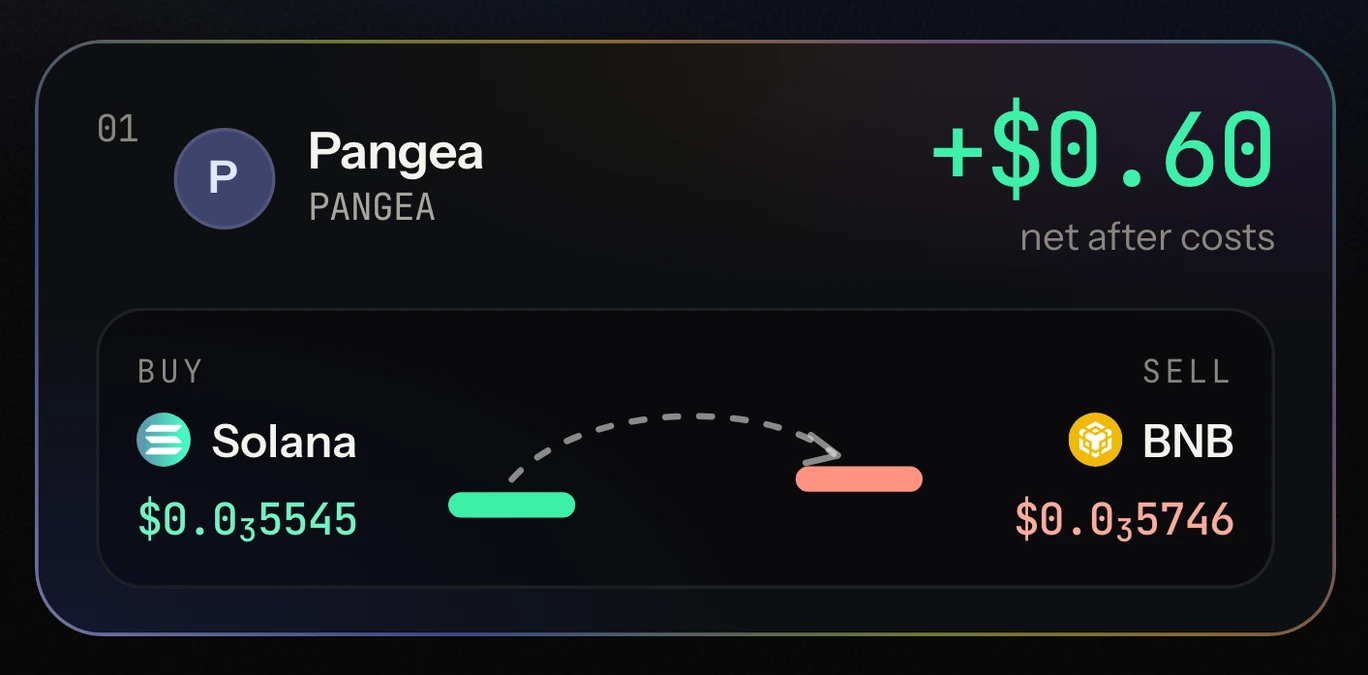
Every Pangea coin trades on five chains at once. When one runs ahead, Hoppr shows the gap and what is left after gas and fees.
CA soon
Buyers hit one chain. A rush on Solana lifts the price there. The other four pools have not moved yet.
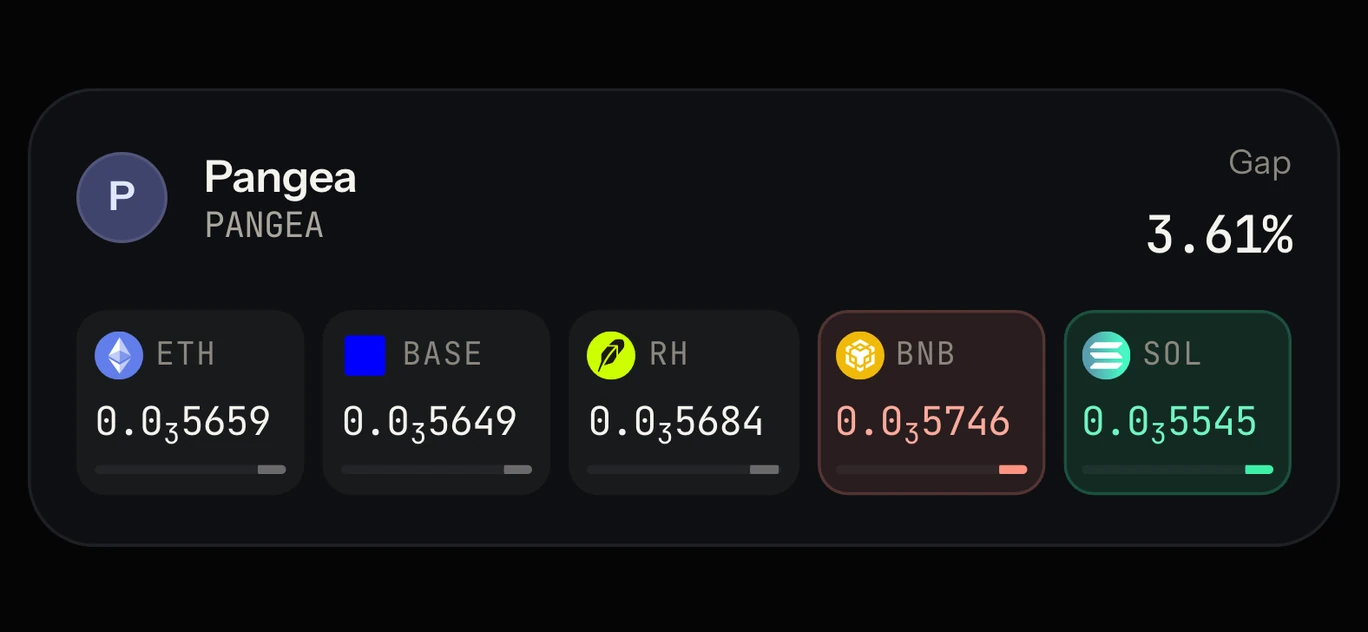
Prices split. Same coin, five pools. It now costs more on one chain than on another.
Hoppr sees it. Every pool on every chain, read side by side and sorted by the gap.
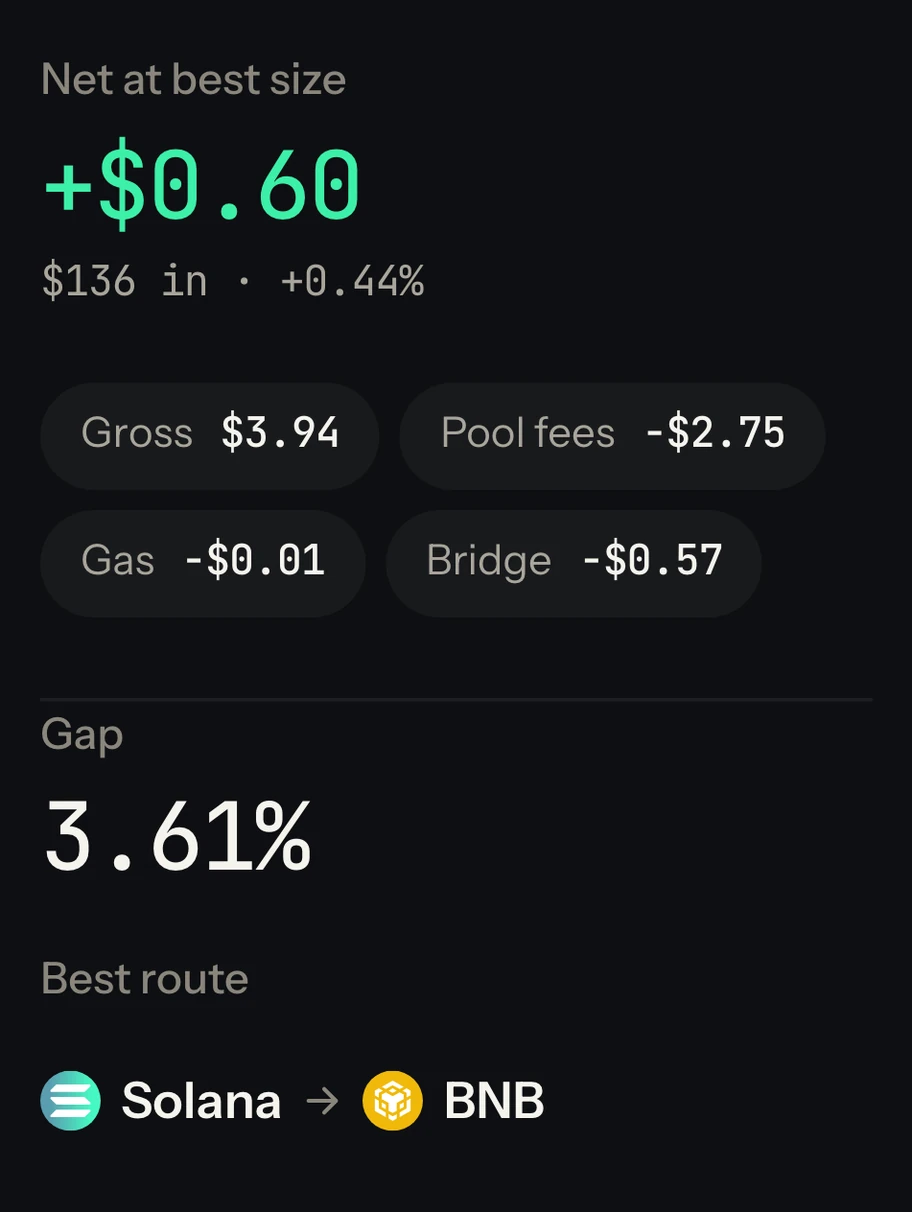
It counts what is left. Pool fee on both sides, gas on both chains, the bridge back. Only the net counts.
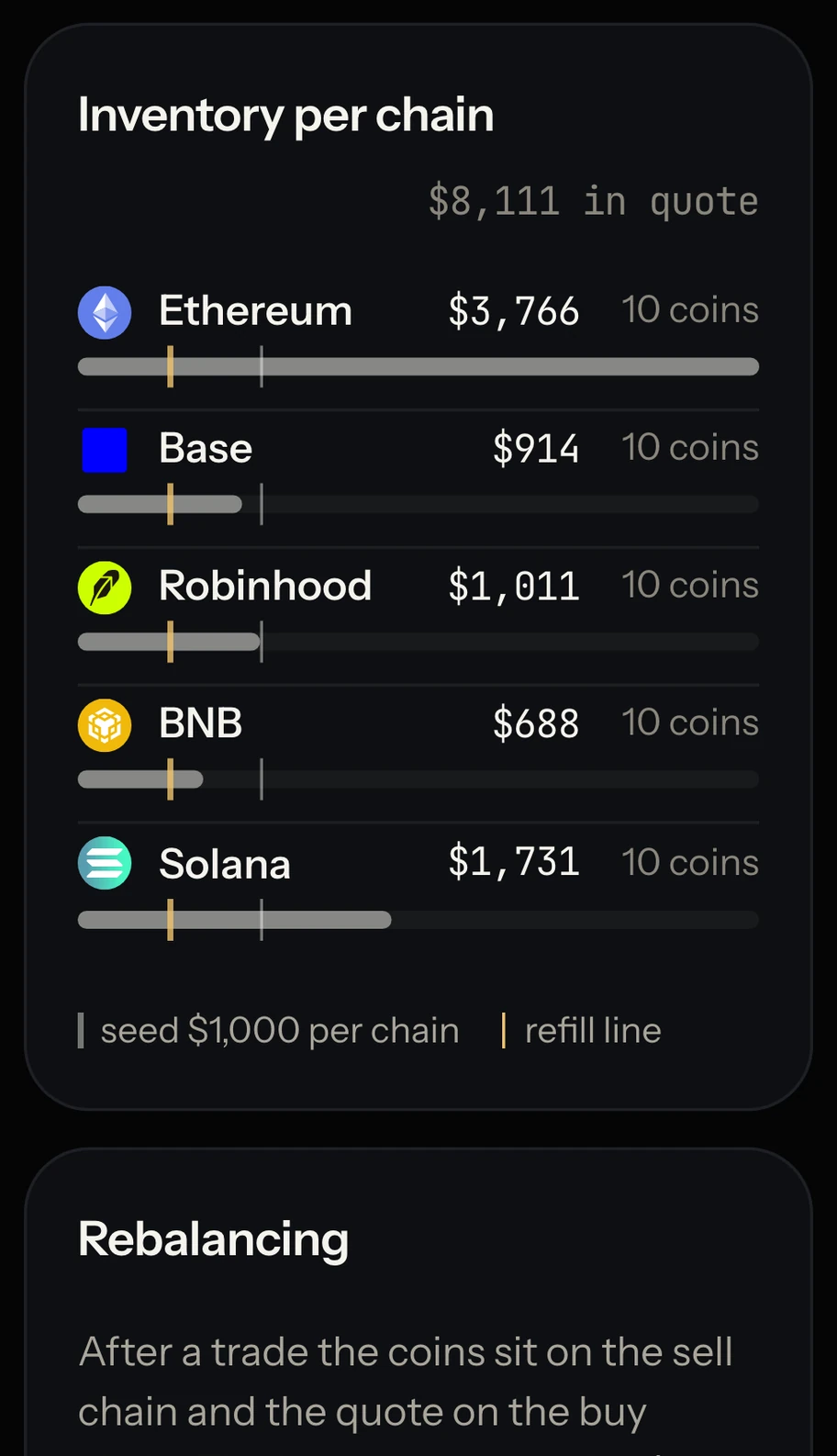
Buy low, sell high, at once. Both legs fire from money already on each chain. Nobody waits for a bridge.
Rebalance later. Tokens move back over the bridge when it is cheap. Holders see all of it live.
Pangea pools on five chains, re-read every 15 seconds.
Pools with over $1K of real liquidity on both sides, biggest net first.
A Pangea coin is one token with a separate pool on each chain. A buy moves only the pool it lands in.
Uniswap v4, priced in ETH. Gas costs the most here, so a gap has to be wider to pay.
Uniswap v4, priced in ETH. Cheap gas, and no currency risk against Ethereum or Robinhood Chain.
Uniswap v4, priced in ETH. Pangea’s second-busiest chain by volume on 22 Oct.
Uniswap v4, priced in BNB. A leg here also rides the BNB price until you rebalance.
Meteora DAMM v2, priced in SOL. Pangea’s busiest chain by volume on 22 Oct.
You can find gaps yourself. It takes five explorers, a calculator and good timing.
Five tabs, refreshed by hand
Spotted after it moved
Guessed, or left out
One leg, then the other
First, while the price runs
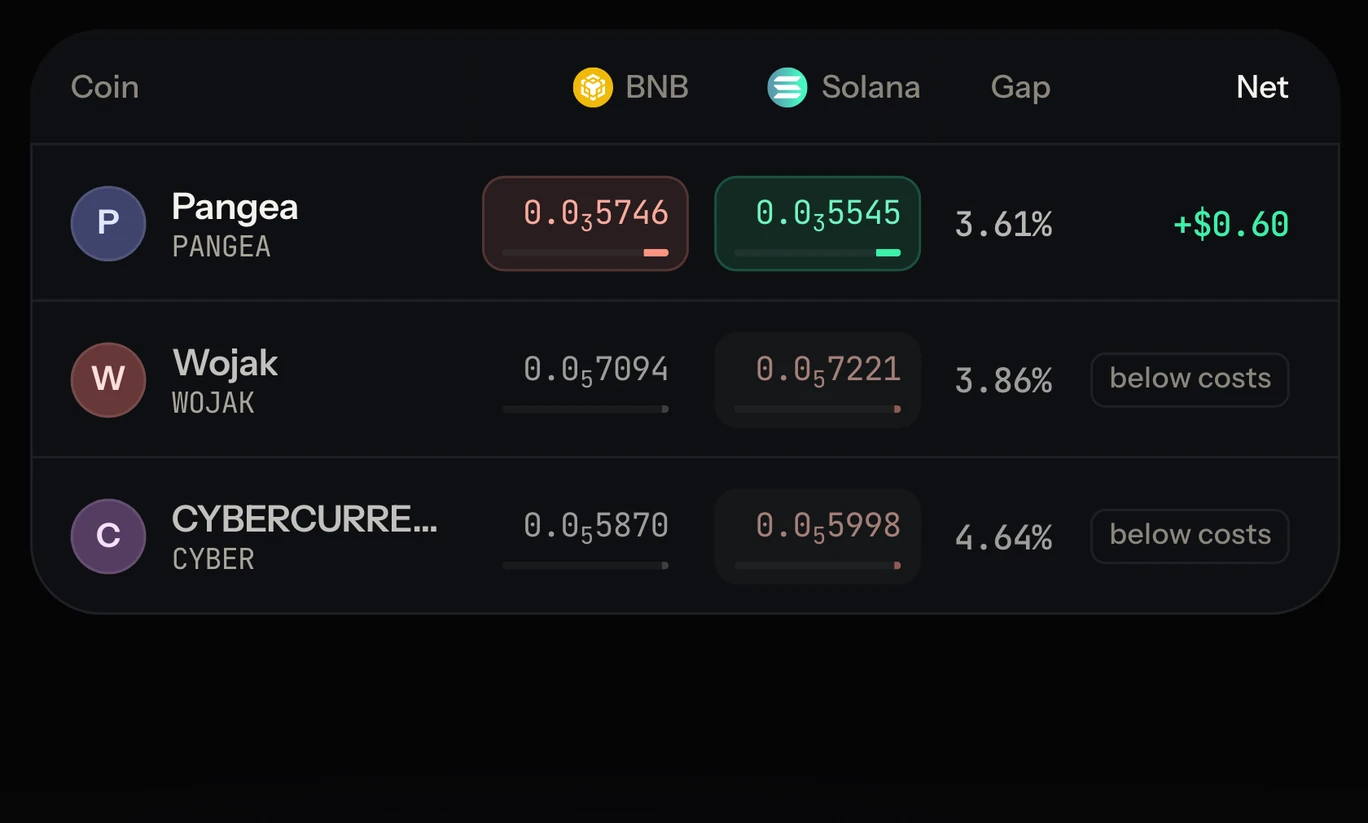
Every pool in one table
Sorted, biggest net first
Fees, gas and bridge counted
Both legs at the same moment
Afterwards, when it is cheap
Every coin, its price on all five chains, the best route and what is left after costs. Biggest net gaps on top.
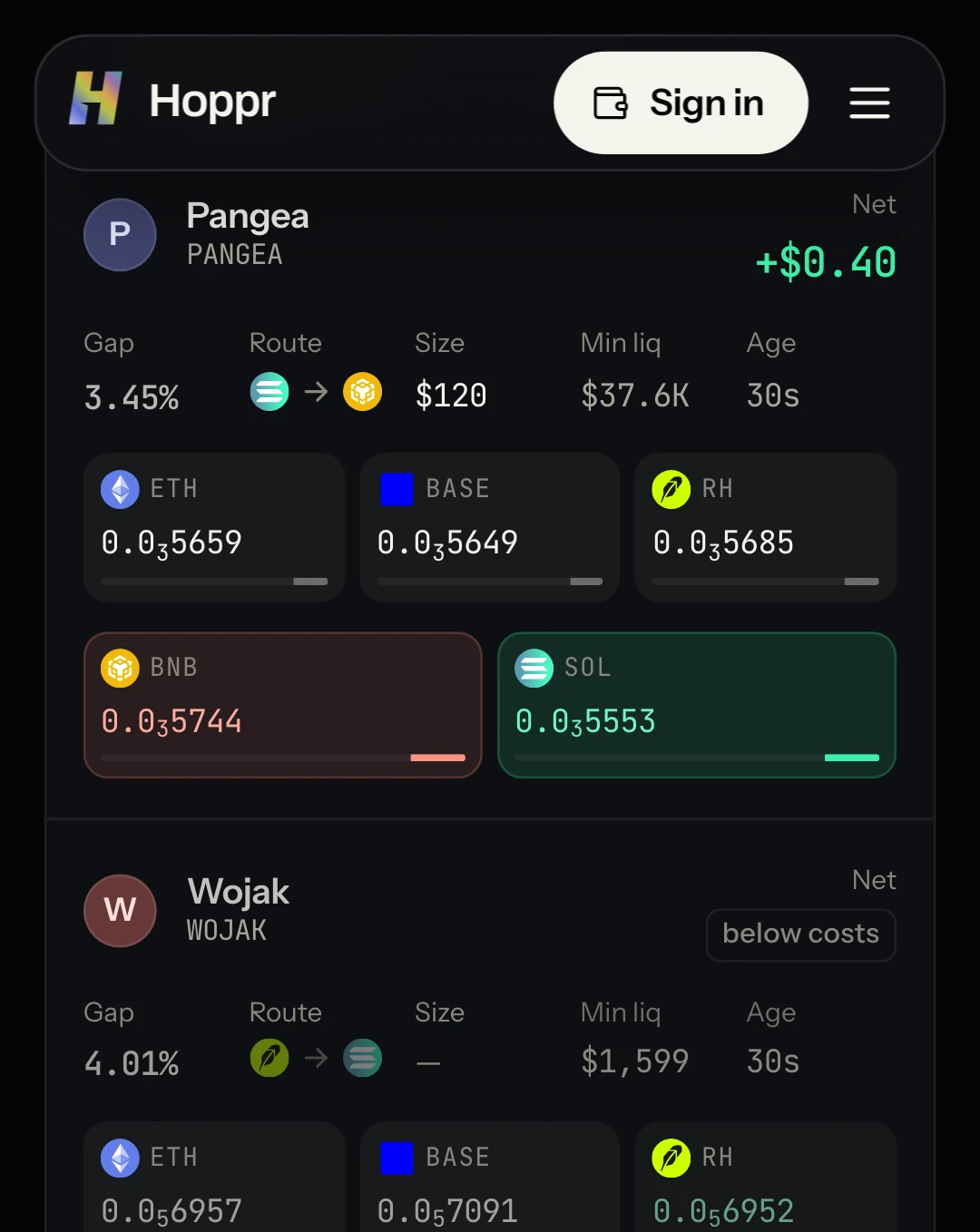

Four steps, every time a pool moves. Run them yourself in the terminal, or watch the bot run them.
The server reads every Pangea pool on all five chains, every 15 seconds.
Pool fee on both sides, gas on both chains, the bridge back. What is left decides.
Buy on the cheap chain and sell on the dear one at once, from money already there.
Tokens go back over the bridge afterwards, so the next gap finds money on both sides.
The same dollars push a small pool further than a deep one. That is how one chain runs ahead of the other four.
Live pool depth of the widest gap, the widest gap right now on pools with over $1K of real liquidity.
Constant-product math on each pool’s live reserves, fee taken first. Depth is price × tokens in the pool.
Buy on —, sell on — · gap —
Gaps close when traders buy on the cheap chain and sell on the dear one. On 22 Oct the PANGEA gap went from 13.2 % to 3.5 % in about a minute.
The bot keeps money on every chain. When a gap clears its costs, it buys where the coin is cheap and sells where it is dear, in the same moment. Nothing waits for a bridge.
That is why the board sorts by net, not by gap. PANGEA’s deeper pools in the same snapshot: 4.1 % gap, best size $330, $3.01 left before gas.
Trade the gaps yourself from the terminal, or follow the house bot. It runs in paper mode: simulated fills on live pool data.

Two pool fees, gas on two chains and the bridge back. Hoppr takes nothing from your trades.
is the round trip on a launch with the usual 1 % fee: 1 % to buy, 1 % to sell, 0.2 % to bridge back. Gas on both chains comes on top. A smaller gap cannot pay.
| Cost | Paid on | Where the number comes from | Size |
|---|---|---|---|
| Pool fee, buy leg | Every trade | On-chain, else 1% assumed | 0.3–5% |
| Pool fee, sell leg | Every trade | On-chain, else 1% assumed | 0.3–5% |
| Gas, EVM chains | Every swap | ≈180k gas × live gas price | Live |
| Gas, Solana | Every swap | Base fee + priority estimate | Live |
| Bridge fee | Rebalance | LayerZero, per Pangea docs | 0.2% |
| LayerZero message | Rebalance | Per-chain estimate | ≈$0.10–1 |
| Hoppr | Never | No fee on trades | 0% |
Pangea sets the pool fee per launch, between 0.3 and 5 %. Legs priced in BNB or SOL also carry currency risk until you rebalance.
It trades paper money today. The rules are written for the day it does not.
If a chain’s prices are older than one read cycle, that chain sits out.
Never more than both pools can take before the gap is gone.
A ceiling on every chain, so one bad pool cannot drain the rest.
One switch stops every leg on every chain.
Every rule runs on simulated fills and live data, in public, before any real money.
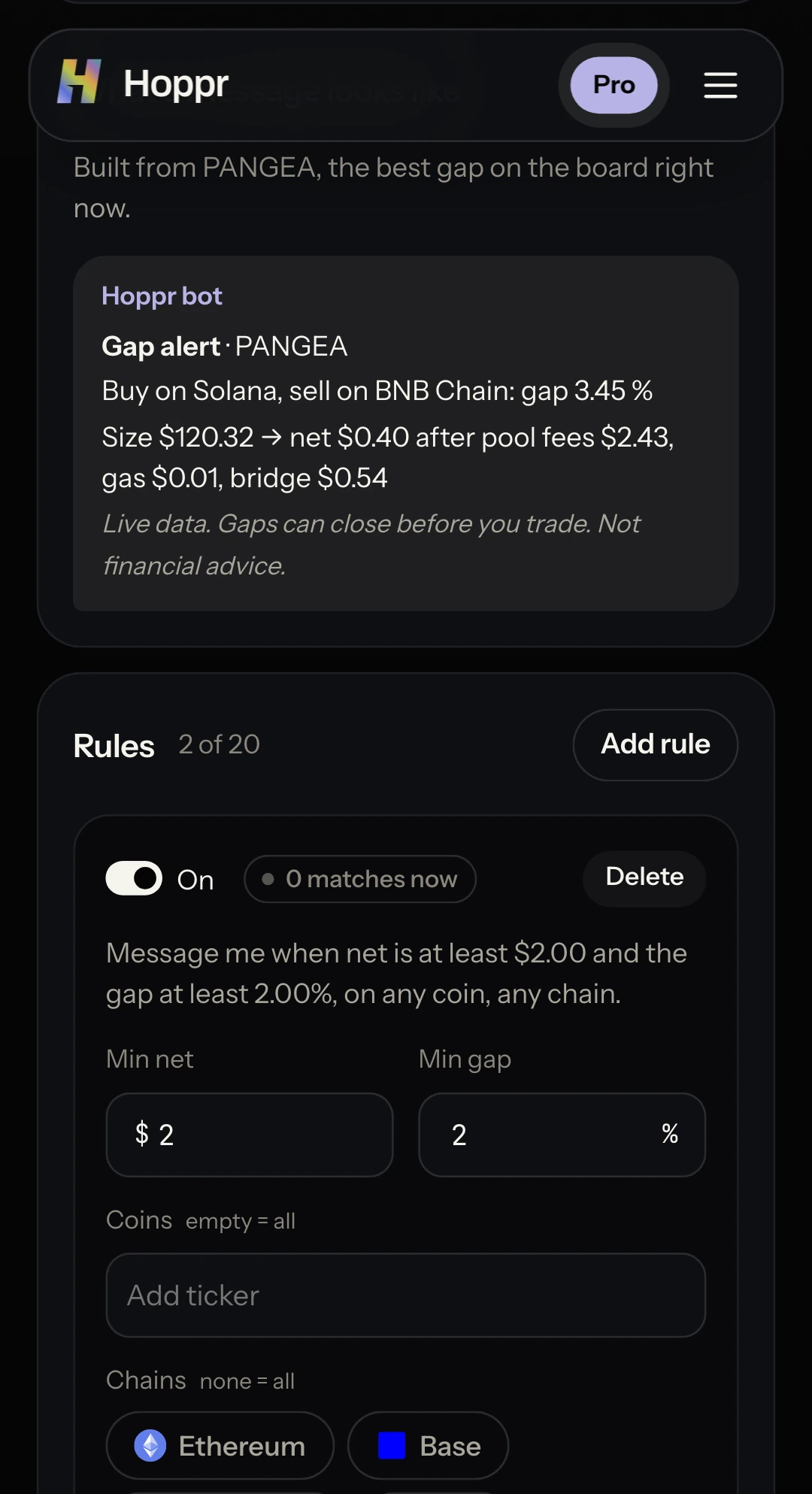
The board is free with a 60 second delay. Hold $HOPP on any of the five chains and you see it live, with Telegram alerts. Pro holders also get the API.
| What you get | Free | Holder |
|---|---|---|
| Gap board | 60 s behind | Live, every 15 s |
| Coin view and routes | Yes | Yes |
| Telegram alerts | — | Yes |
| API keys, 60 requests a minute | — | Pro holders |
| Bot lane | Shared | Faster lane |
| Community strategies | Read | Run |
Holding is the sum across every wallet you link, on all five chains. Thresholds are set at launch.
The terminal shows the math behind every number. Open it
From Pangea’s public pool data, read by our server every 15 seconds and shared by everyone who looks. Your browser never calls Pangea. Omnichain coins sit in a second tab, marked early.
Because it has five pools. Ethereum, Base, Robinhood Chain and BNB Chain run Uniswap v4, Solana runs Meteora. A buy moves only the pool it lands in. Arbitrage pulls the prices back together; nothing else does.
No. Both pool fees (0.3 to 5 % per launch, 1 % on most), gas on both chains and the bridge back come off first, and your own trade pushes the two prices toward each other. The board shows the net at the best size, or says the gap is below costs.
A bridge transfer took 5 to 44 seconds in Pangea’s bridge log on 22 Oct, and the gap can close while it travels. Hoppr sells tokens that are already on the dear chain and sends tokens back over the bridge afterwards.
The live board instead of the 60 second delay, Telegram alerts, API keys for pro holders, the faster bot lane and community strategies. $HOPP is not launched yet; its addresses will appear on this page first.
No. Today it runs in paper mode: one public house bot, simulated fills on live pool data, no deposits and no keys. Real execution comes later, and this page will say so first.
Ethereum, Base, Robinhood Chain, BNB Chain and Solana: the five chains every Pangea coin trades on.
Nothing per trade. You pay pool fees, gas and bridge fees to the networks. The live feed and the holder features need $HOPP.
The server re-reads every pool every 15 seconds, and holders get the newest board. The free board shows it as it was 60 seconds earlier. Neither is tick by tick, so check the price before you trade.
Yes, for pro holders: the board and single coins as JSON with an API key, always live, 60 requests a minute per key.
Gaps close before you trade. Thin pools move further than you expect. BNB and SOL legs carry currency risk until you rebalance. Bridges can be slow, and every pool is a smart contract. Not financial advice.
No. Hoppr is independent and reads Pangea’s public data. It is not affiliated with Pangea or Omnichain.